Finding the right one
We match the vehicle to the beneficiary, not to what is on the lot. We consider seating, transfer method, headroom, the wheelchair, who will drive, where the vehicle will park, and how it will be used every day. The goal is simple: the right fit that makes daily life easier for everyone.
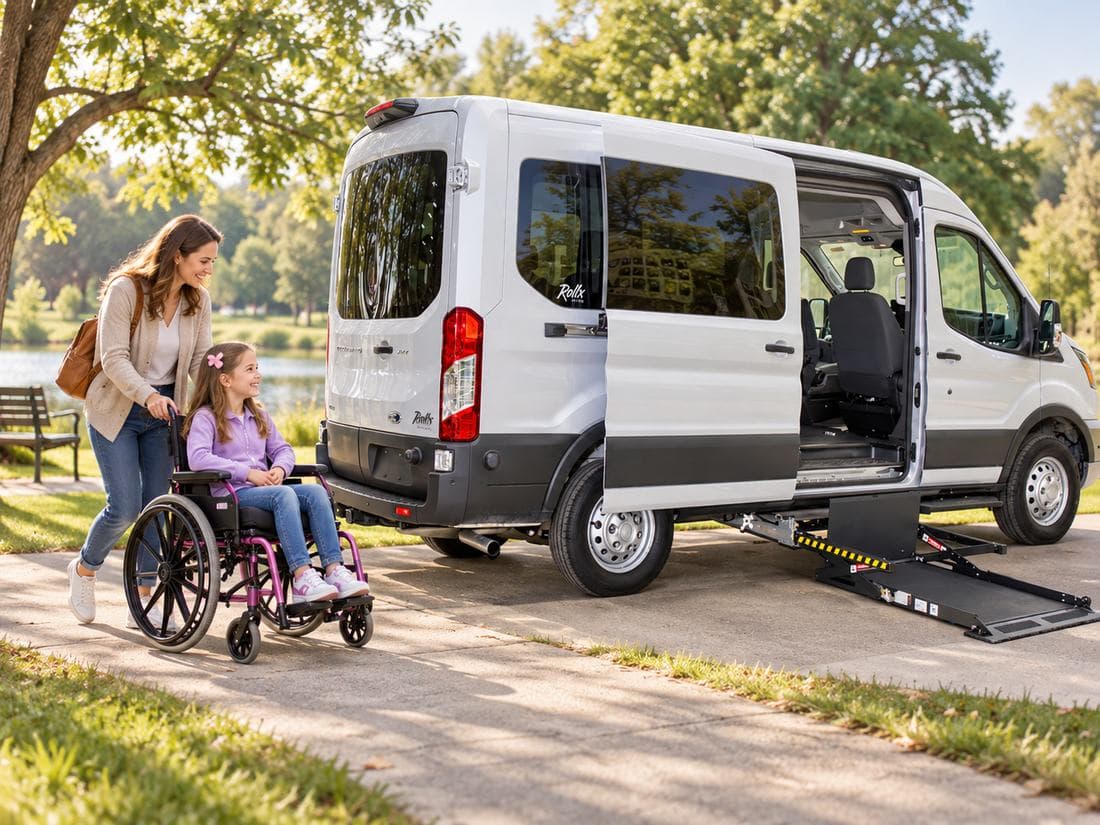
The questions that decide the vehicle
How does the beneficiary get in?
Rolling in and staying in the chair, transferring to a seat, or being lifted. This alone rules most vehicles out.
What chair are we building around?
Dimensions, weight, tilt, headrest height, and whether it is likely to change in the next five years.
Where does the person sit?
Front passenger, mid-row, rear. It changes the entry, the tie-down layout and how it feels to ride.
Who is driving?
A parent, a rotating group of paid caregivers, or the beneficiary themselves — which brings hand controls and transfer seating into the specification.
Where does it live?
Garage height, driveway slope, apartment parking, snow. A ramp needs somewhere to deploy, every day, in every season.
What is the trip?
School runs and appointments are a different vehicle from long highway travel with equipment in the back.
How many people need to travel?
The beneficiary, a driver, siblings, a caregiver — sometimes all at once. Seating capacity decides the platform as much as the wheelchair does, and a third-row station seat is often the difference between the family travelling together and taking two vehicles.
What equipment goes in it?
A third-row station seat, a power inverter, rubber transit flooring, power tie-downs, a trailer hitch. The added equipment is frequently what makes a vehicle work for a particular family, and it is specified before the build rather than added afterwards.
Platforms
New vehicles, and certified used vehicles when that is the better answer for the trust.
| Chrysler Pacifica & Voyager | Side entry or rear entry |
| Toyota Sienna | Side entry |
| Ram Promaster | Full size, standard or long wheelbase |
| Ford Transit | Full size |
Side entry lets a wheelchair user ride in the front passenger position and park at a standard curb. Rear entry costs less and suits a rider who travels mid-vehicle. Full size is the answer for a large power chair, a lift, or more than one wheelchair position.
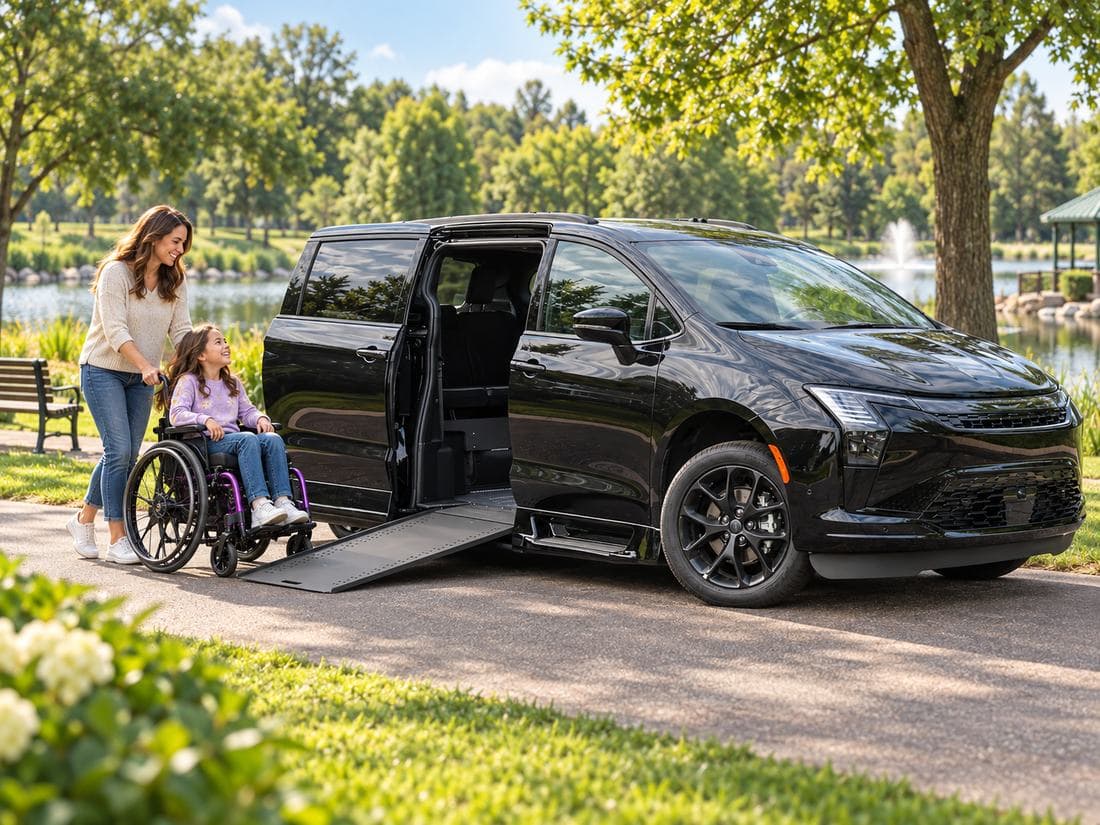
Vehicles on the ground today
Not every trust wants to wait for a build. Our live inventory is searchable by condition, minivan or full size, make and model, price, color and entry type — and every vehicle on it is one we can quote under any of the three arrangements.
If you would rather not sift through a list, tell us about the beneficiary and we will send back the two or three vehicles worth looking at, with the reasoning.
Certified used, inspected
Used vehicles go through a 171-point inspection before they are listed, and the conversion can be reconfigured to suit the beneficiary rather than sold as it stands.
Delivered, not collected
Free delivery on inventory vehicles. Nobody has to travel to Minnesota to take possession of a van.
New builds too
When nothing on the lot is the right answer, we build it. The specification conversation is the same either way.
Coverage starts the day the vehicle is delivered
Every vehicle we deliver, new or used, carries a conversion warranty — and it travels with the vehicle rather than with the shop that built it.
| Component | Coverage |
|---|---|
| Minivan — structural: floor, frame, ramp | 10 years / 100,000 mi |
| Minivan — Rollx Basic Warranty: power door, ramp and kneeling | 4 years / 40,000 mi |
| Full size — lowered floor, frame, metal fabrication | 6 years / 60,000 mi |
| Full size — adaptive equipment: lifts, power doors | 1–3 years / 36,000 mi |
| Certified used | Varies by vehicle |
If the vehicle is sold
The structural coverage stays with the original owner and does not transfer. The Rollx Basic Warranty (the 4-year / 40,000-mile coverage) does pass to a subsequent owner, as long as time and mileage remain on it. A trust that keeps the vehicle keeps the full structural coverage for its own use.
Service comes to the driveway
At-home service is available across much of the country and is free while the vehicle is under warranty. Outside that area we authorize repair at whatever shop is convenient — a dealership or an independent. There is no approved warranty center you have to reach.
For a wheelchair user, a vehicle in the shop is not just an inconvenience — it is a week at home and a week of lost mobility. That is the reason service travels rather than the vehicle.
Tell us about the beneficiary and we will find the vehicle
No obligation, and no arrangement to choose until you have seen what the vehicle costs three different ways.